

The Sea and the Shipwreck in Marina di Massa
GS Travel Photo is a participant in the Amazon Services LLC Associates Program. As an Amazon Associate, I earn from qualifying purchases. That means I may earn a small commission if you book or buy through these links — at no extra cost to you. You can read the full privacy policy here.
Eighteen Miles Later…
Eighteen miles. That’s what it took to get from the quiet medieval streets of Sarzana to the salt-stained coastline of Marina di Massa. And not the charming kind of eighteen, either.
This one was a slog. A sweaty, sunburnt, mentally questionable march across hills, highway-adjacent sidewalks, Roman ruins, industrial marble zones, and endless stretches of “are we even on the trail anymore?” By the time we rolled into town, our feet were done negotiating.
We’d started the day optimistic. The plan was simple—follow the route over the hill to Luni, check out some ancient ruins, then head toward the coast and collapse gloriously into the sea. In theory, it was the pilgrim’s dream ending.
In reality?
The sun was punishing, the towns kept moving further apart, and by the time we reached the outskirts of Marina di Massa, we were dehydrated, low on snacks, and spiritually broken by one too many gravel detours.

But then—finally—we heard it. The sound of waves.
It was like someone flipped a switch. The wind got cooler. The air smelled like salt instead of sweat and sunscreen. And the town itself?
Okay, maybe it peaked in 1983. But we’d made it to the sea. Not in style. Not gracefully. But we made it.
Arrival at the Edge of Italy
You don’t walk eighteen miles to the beach and expect glamour. You hope for it, sure. But what you get—especially in Marina di Massa—is something different entirely. Not glamorous. Not curated. But real.

There’s a beauty in that kind of self-awareness. Beach clubs line the shore in neat, sun-bleached rows. Umbrellas are rented, espresso is served with minimal effort, and every storefront looks like it’s seen at least two generations of family ownership and one minor electrical fire. It’s a bit gritty, a bit retro, and completely lived-in.
Which made it perfect. Because after a full day of heat, hills, and second-guessing our navigational skills through the backroads of Liguria, the last thing we wanted was anything fake.
We didn’t want boutique charm. We wanted cold drinks, a clean bed, and the smell of salt in the air. And Marina delivered.
The moment we reached the promenade and heard the rhythmic slap of the waves, everything shifted. The exhaustion was still there—don’t get me wrong—but now it came with a soundtrack.
Our steps slowed. We wandered through the dusty grid of beach bars and aging hotels until we found one with a creaky elevator and a working air conditioner. Heaven.
Our ’80s Hotel Miracle
Hotel Gabrini wasn’t booked ahead of time. We stumbled in like heat-stroked zombies, half-delirious from the road, hoping someone behind the desk might take pity on two sweat-drenched travelers.

They did. In fact, they welcomed us like regulars. No fuss. No questions. Just an old-school check-in process and a room key with a literal tassel on it. It was glorious.
The place felt like a time capsule from a simpler era—if we’re being generous. Marble floors, pastel walls, and a tiny elevator that made noises like it was sharing its opinion of our backpacks. But everything worked.
The AC blasted. The beds were crisp and clean. The bathroom had actual counter space (a rarity we’d come to cherish). And the staff? All smiles. They weren’t putting on a show.
Breakfast the next morning sealed the deal. We were shown to a lower-level dining room where the tables were already set. No frantic buffet scramble. Just a server taking drink orders—“Cappuccino? Cafè Americano?”—while trays of fresh cornetti, bread, jam, and yogurt waited nearby.
It wasn’t fancy. It was just done right.
Hotel Gabrini had what most boutique places try to fake: a sense of familiarity, like staying with your slightly eccentric aunt who really wants you to eat more.
The Shipwreck Surprise
We weren’t expecting shipwrecks. We were just out for an evening walk, doing that slow coastal shuffle you do when your legs still hate you but the promise of sunset and sea breeze is enough to get you moving again.
The plan was simple: head toward the pier, soak in some golden hour light, and maybe find dinner after.
Then we saw it.
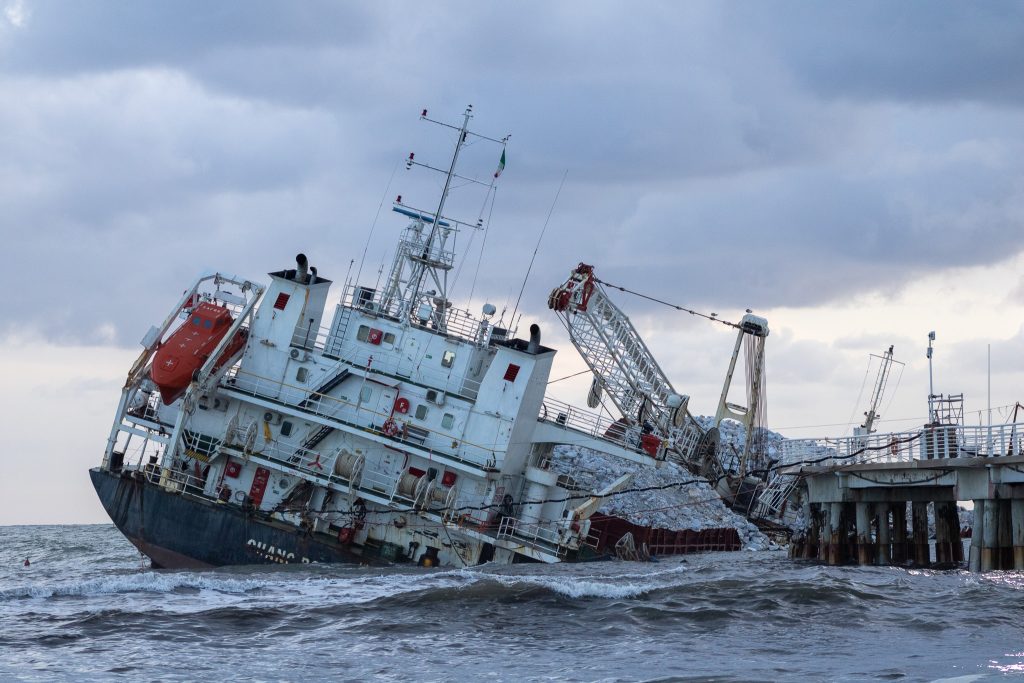
At first, it looked like a weird art installation—an enormous rusted hull jutting out from the water at an odd angle, half-sunken beside the pier.
There were no ropes, no signs, no barriers. Just… a ship. A real one. Sitting in the water like it gave up halfway through docking.
Turns out, we’d stumbled upon the Guang Rong, a Chinese cargo ship that crashed right off Marina di Carrara’s coast in 2020 while hauling giant blocks of Carrara marble. And when we say “crashed,” we mean it still looks exactly like it did the moment it hit.
Tilted. Rusting. Wildly out of place—yet somehow totally at home against the gritty skyline of cranes and quarry dust.
We walked the full length of the pier to get a closer look. No one stopped us. No one seemed to care. And that was the surreal part.
This wasn’t some fenced-off disaster zone. It was just there—a maritime shrug from a town that clearly has bigger things to worry about.
Sea Therapy
After dinner, after the shipwreck, after the “Are we too tired to move?” debate, we walked to the beach one last time. It was almost dusk. That golden stretch of evening where the heat finally backs off and the world gets a little softer.
Our legs still hurt. Our clothes still stuck in weird places. But we couldn’t not go.
The sand was warm but forgiving, a kind of slow-motion massage for tired feet. The waves rolled in, indifferent to how far we’d come. And maybe that’s what made it hit so hard.
The sea didn’t care what we’d walked through. It didn’t ask questions. It just showed up—patient, steady, humming its old rhythm.
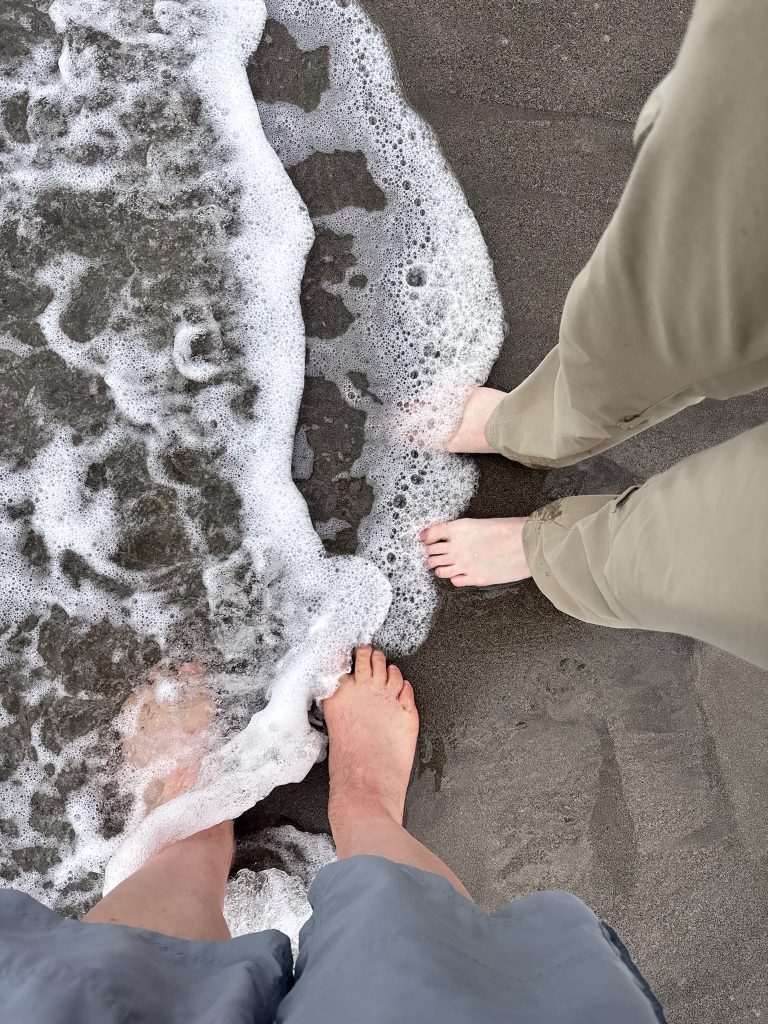
We stepped in. Shoes off. Pants rolled. Saltwater creeping over blisters and beach-crusted skin. And that first cold hit? It didn’t sting. It healed.
It’s hard to explain what that kind of moment does after days of hills, maps, and pushing through your own mental nonsense.
We didn’t say much. Didn’t need to. Just stood there together, letting the water rinse it all down to quiet.
A Moment to Breathe
We’d walked from one coast of Italy to the edge of another. Not the full peninsula, sure—but enough that when we finally stood in the Ligurian Sea, it felt earned.
After mountains, convents, blisters, thunderstorms, missed turns, and too many energy bars, this was the first real exhale.
There’s something about standing in saltwater that resets you. It’s not just cooling off your feet or rinsing away the dust.
It’s a moment of recalibration—when you realize how far you’ve come, and how much of that journey was internal. We weren’t looking for symbolism when we stepped into the waves. But it found us anyway.
This was the halfway point of something bigger. Not just the Via Francigena, but our own messy, beautiful version of it. A walk that had already shifted shape a dozen times and would continue to evolve.
But for now, we stood still. Let the tide lap at our ankles. Let the sky turn gold behind the dark clouds.
No monuments. No applause. Just water, wind, and a feeling that maybe—just maybe—we were exactly where we were supposed to be.
The Day Everything Shifted
Some chapters change the pace. Others change the story.
This one did both.
It wasn’t just about reaching the sea—it was about everything that broke us down along the way. The hills. The heat. The bad signage and blistered feet. The cargo shipwreck we didn’t see coming.
And the quiet, crumbling stretch of coast that reminded us we didn’t have to keep pushing.
This wasn’t a triumphant arrival. It was a surrender. And maybe that’s what made it so honest. Standing in the Ligurian surf at dusk, we didn’t just cool off. We reset.
We let go of the pressure to finish strong or walk every mile. And in that letting go, something better showed up: clarity.
If you’ve ever hit a point where you just needed to stop and take a breath, this was that moment. The walk stopped being about how far we were going, and started becoming about why we were out there at all.
Want the full story, shipwreck and all?


